What is Jungian Psychotherapy?
Vanessa Wolter
Jungian psychotherapy invites us to see anxiety, dreams, symbols, and life transitions in a different way—not simply as problems to solve, but as invitations into a deeper relationship with ourselves. This introduction explores how Jung understood the psyche and why his ideas continue to speak so deeply to many people today.
What is Jungian Psychotherapy?
There are times in life when something begins to change before we have words for it.
Outwardly, everything may look much the same. We go to work. We answer emails. We make dinner. We laugh with friends. And yet, somewhere beneath the familiar rhythm of our days, something no longer feels quite the way it once did.
Perhaps anxiety begins to appear where confidence once lived. A relationship starts asking different things of us. We find ourselves standing at the edge of a life transition we never expected, or carrying a grief that feels difficult to explain. Sometimes it is a dream that returns again and again, quietly insisting that we remember it. Most of us meet these moments by asking, quite naturally, How do I make this go away?
Jungian psychotherapy makes room for another question: What if this experience is asking for my attention and understanding before asking for a solution?
I have always loved that question, perhaps because it asks so little of us at first. It doesn't require us to understand what is happening. It doesn't ask us to believe that everything happens for a reason. It simply invites us to become a little more curious about our own lives.
That curiosity can change everything.
Not because it immediately removes our suffering, but because it gently shifts the relationship we have with it. There is something I have noticed, both in my own life and in the lives of those I have the privilege of sitting with. When we stop treating our inner world as an adversary, it often begins to feel less like a problem to solve and more like a landscape we are slowly learning to know.
Landscapes have weather. They have seasons. There are places where the path disappears for a while, and places where the view opens so unexpectedly that we stop walking without quite realizing why.
Perhaps our inner lives are not so different. Carl Jung spent much of his life listening to that possibility.
Rather than seeing the psyche as something broken that needed to be fixed, he began wondering whether it might already possess its own quiet movement toward wholeness. That idea continues to feel deeply hopeful to me. Not because it promises an easy path, but because it reminds us that healing may have less to do with becoming someone else than with learning, gradually and compassionately, how to accompany the person we already are.
The Psyche Speaks in Symbols
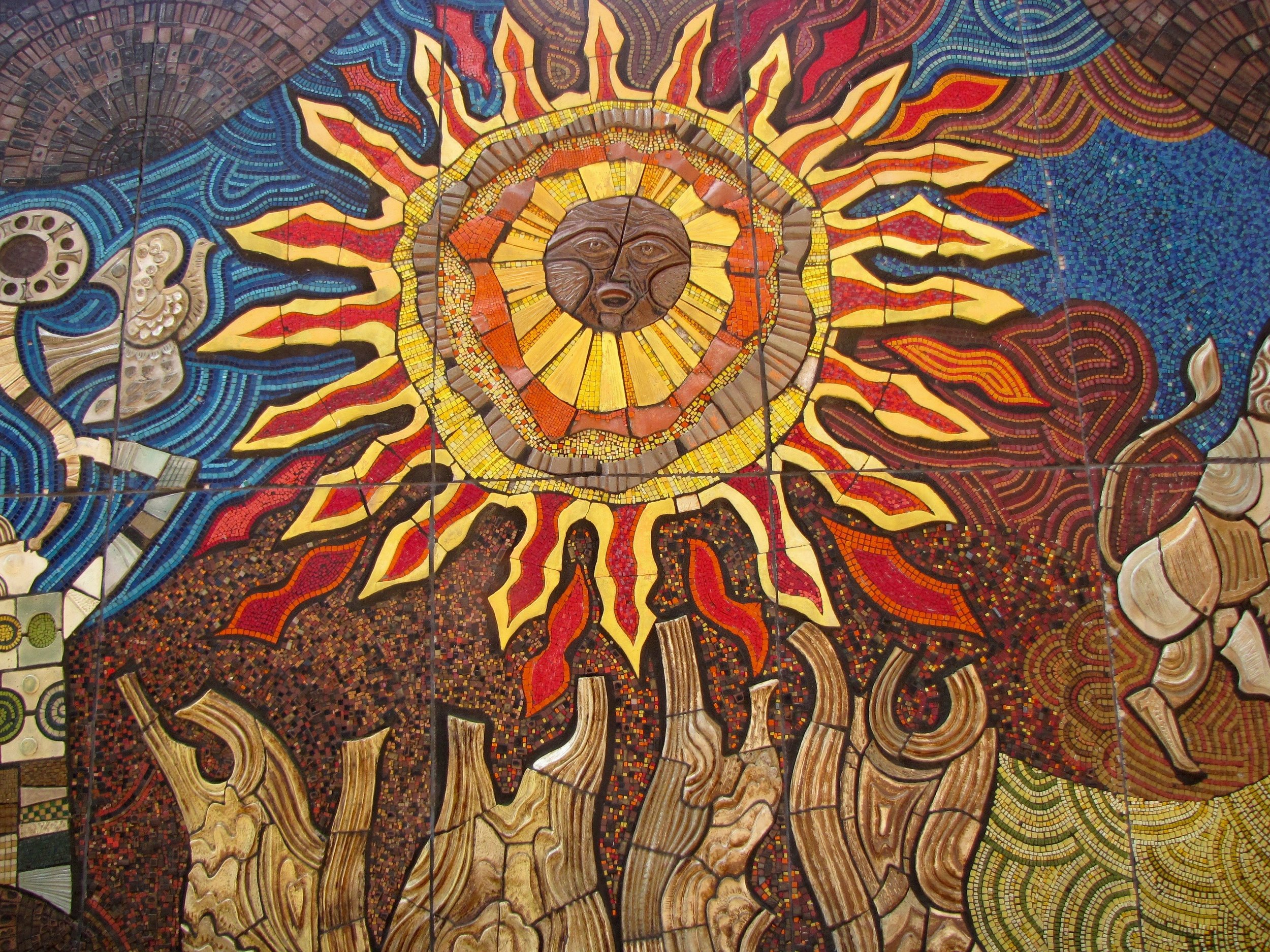
Much of our inner life does not speak in straightforward explanations. Instead, it speaks through images, stories, metaphors, and moments that seem to linger long after they have passed.
A dream that won't leave you. An animal that repeatedly appears during an important season of life. A piece of music that moves you in ways you cannot quite explain. A recurring image in your imagination. A myth or fairy tale that feels strangely familiar. Even certain people who draw us in—or stir something difficult within us—may become part of the symbolic language through which the psyche communicates.
Jung understood symbols not as puzzles with hidden answers, but as living companions. Unlike a dictionary definition, a symbol is never exhausted by a single interpretation. We may return to the same dream years later and discover that it has something entirely new to offer—not because the dream has changed, but because we have.
In our work together, we are less interested in asking, "What does this symbol mean?" than in wondering, "How is this symbol alive for you?" There is a spaciousness in that question, one that leaves room for your own experience rather than imposing someone else's interpretation. Often, meaning unfolds gently, much as a landscape slowly reveals itself as the morning fog begins to lift.
Dreams as Living Conversations
Jung once described dreams as letters from the unconscious, but I often think of them as conversations that continue while the thinking mind is asleep.
Dreams rarely speak in literal language. Instead, they weave together emotion, memory, imagination, and symbol in ways that can feel mysterious, surprising, and deeply personal. They may bring us into contact with forgotten parts of ourselves, illuminate strengths we have overlooked, reveal fears we have been unable to acknowledge, or quietly offer a new perspective on a situation we believed we already understood.
The goal is not to decode dreams as though there were a universal key hidden somewhere in a textbook. Rather, we stay close to the images themselves, allowing them to breathe, to unfold, and to gradually reveal their own wisdom over time. Often, a single dream continues speaking for months or even years, offering new layers of meaning as our lives themselves begin to change.
Whether or not you remember your dreams, this same conversation often continues throughout waking life—in moments of synchronicity, in unexpected encounters, in creative inspiration, and in those experiences that leave us with the quiet feeling that something meaningful has just brushed against the edges of our awareness.

Individuation: Becoming More Fully Yourself
At the heart of Jungian psychology is a lifelong process that Jung called individuation—the gradual unfolding of the unique person you were always becoming.
This is not about becoming a better version of yourself, nor about striving toward some perfected ideal. It is less like constructing a new identity and more like uncovering one that has been quietly waiting beneath layers of adaptation, expectation, fear, and habit.
As we move through life, parts of ourselves naturally become hidden. Some were never welcomed. Some were set aside in order to belong. Others simply remained dormant until life was ready to call them forward.
Individuation invites us into a gentle process of remembering and integrating these forgotten or neglected parts of ourselves. It asks us to hold both our gifts and our vulnerabilities, our light and our shadow, our certainty and our questions, with increasing compassion. Slowly, almost imperceptibly, life begins to feel less like performing a role and more like inhabiting one's own skin.
This unfolding is rarely linear. It moves more like the seasons than a staircase, often circling back to familiar places, only to discover that we are meeting them with different eyes than before.
How I Hold Jungian Psychotherapy
Jung's work provides an important foundation for the way I practice, but it is not the whole landscape.
My work is also informed by Gestalt therapy, existential psychology, mindfulness, somatic awareness, and many years of study within Buddhist and nondual traditions. Together, these perspectives share a deep respect for direct experience and for the innate wisdom that often begins to emerge when we slow down enough to truly listen.
In our work together, we might explore dreams, recurring life patterns, emotions that seem difficult to understand, the wisdom of the body, questions of identity and purpose, creativity, grief, relationships, or the symbolic threads that quietly weave themselves throughout your life. Sometimes we follow a dream. Sometimes we follow a feeling. Sometimes we simply sit together with a question that does not yet have an answer.
I do not believe my role is to interpret your experience for you or to fit your life into a predetermined theory. Rather, I see therapy as a collaborative exploration in which we become curious together, trusting that your own psyche already carries an intelligence that deserves both respect and careful attention.
Again and again, I find that healing does not come from forcing life into clarity, but from learning how to remain in relationship with its mystery.
An Invitation to Begin Listening
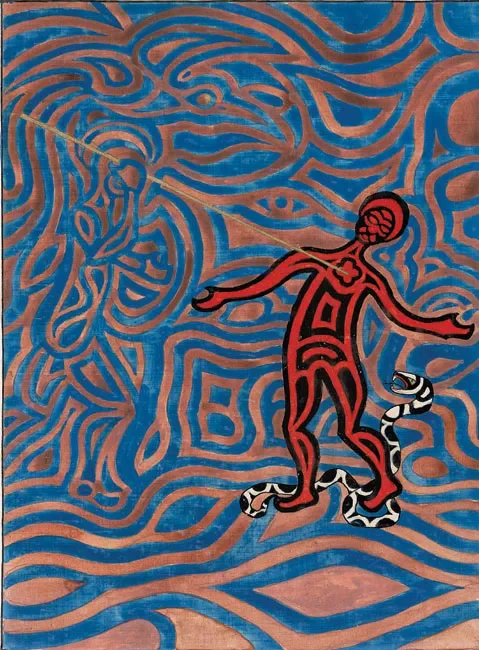
You do not need to know anything about Jungian psychology to begin listening more closely to your own inner life.
Perhaps, over the coming week, you simply notice what quietly asks for your attention.
Is there a dream that lingers after you wake, not asking to be solved, but remembered?
Is there an image, place, animal, or story that has unexpectedly followed you through different chapters of your life?
Is there a feeling you have been trying to push away, and what happens if, for just a moment, you ask not, "How do I make this disappear?" but, "What might this be inviting me to see?"
There is no need to arrive at immediate answers.
Often, the psyche reveals itself the way dawn arrives—not all at once, but gradually, as our eyes become accustomed to the light.
Perhaps the deepest hope of Jungian psychotherapy is not that you become someone new, but that you begin recognizing the quiet thread that has been weaving through your life all along—the one that has spoken through dreams, longings, heartbreaks, moments of beauty, unexpected encounters, and intuitions that seemed too subtle to trust. As we begin listening more carefully, life can start to feel less like a collection of disconnected events and more like an unfolding conversation with something both deeply personal and quietly mysterious.
We do not rush that conversation.
We simply learn, together, how to listen.
If this way of listening resonates with you...
Jungian psychotherapy is ultimately less about finding quick answers than about learning to meet your inner life with greater curiosity, compassion, and attention. If you're longing for a space where this kind of exploration can unfold, I'd be honored to walk alongside you.